What if I told you that sitting in front of a specific wavelength of light for 10-20 minutes a day could reduce inflammation, accelerate healing, improve skin, boost energy, enhance sleep, and genuinely slow the aging process — all backed by over 5,000 peer-reviewed studies? You'd probably say it sounds too good to be true. I said the same thing. Then I spent three years diving deep into the science, co-authored a book on it, and never looked back.
Welcome to the world of Red Light Therapy — or more precisely, Photobiomodulation (PBM). This is the single most exciting modality in anti-aging medicine today, and the research behind it is absolutely stunning.
What Is Red Light Therapy?
Red Light Therapy is the therapeutic use of specific wavelengths of red (630-700nm) and near-infrared (800-1100nm) light to stimulate healing and regeneration at the cellular level. Unlike UV light — which damages DNA and causes aging — these specific wavelengths of light are absorbed by your cells and used as energy to drive biological processes.
The key mechanism is simple: a protein inside your mitochondria called cytochrome c oxidase absorbs near-infrared light and uses it to dramatically boost ATP (cellular energy) production. More ATP means more energy for every cell in your body to repair, regenerate, and perform optimally.
"Red light therapy is essentially charging your cellular batteries. When your mitochondria are optimized, everything works better — your skin, your joints, your brain, your sleep, your recovery."— Dr. Mark Luckie, DC
What Does the Research Actually Show?
With over 5,000 peer-reviewed studies and growing, photobiomodulation is one of the best-studied modalities in regenerative medicine. Here's what the evidence consistently supports:
- Reduced inflammation: PBM reliably suppresses pro-inflammatory cytokines and activates anti-inflammatory pathways — making it a powerful tool for conditions from arthritis to post-surgical recovery.
- Skin rejuvenation: Multiple RCTs show measurable increases in collagen production, reduction in wrinkles, improved skin tone and texture within 8-12 weeks of consistent use.
- Accelerated healing: Used by professional sports teams and military medicine, PBM dramatically speeds recovery from muscle damage, tendon injuries, and wounds.
- Improved sleep: Near-infrared light exposure in the evening has been shown to increase melatonin production and improve sleep architecture.
- Cognitive enhancement: Transcranial NIR therapy is being studied for Alzheimer's, traumatic brain injury, and general cognitive performance enhancement.
- Hormonal support: Studies show PBM applied to the testes increases testosterone production — one of the most surprising findings in the field.
How to Use Red Light Therapy
The beauty of modern red light therapy devices is that you can use them at home. Here's what Dr. Luckie recommends for beginners:
- Wavelengths: Look for devices that output 630-660nm (red) and 810-850nm (near-infrared). Both wavelengths working together produce superior results.
- Distance: 6-12 inches from the device for most full-body panels. Closer for targeted treatment of specific areas.
- Duration: 10-20 minutes per session. More is not better — photobiomodulation follows a dose-response curve.
- Frequency: Daily use produces the best results. Consistency beats intensity.
- Timing: Morning for energy and performance, evening for sleep (avoid intense sessions right before bed).
What to Expect
Most people notice improved sleep quality within the first 1-2 weeks. Skin changes typically become visible at 4-8 weeks. Deeper systemic benefits — joint relief, improved recovery, energy — generally develop over 2-3 months of consistent use. This is not a quick fix. It is a long-term investment in your cellular health.
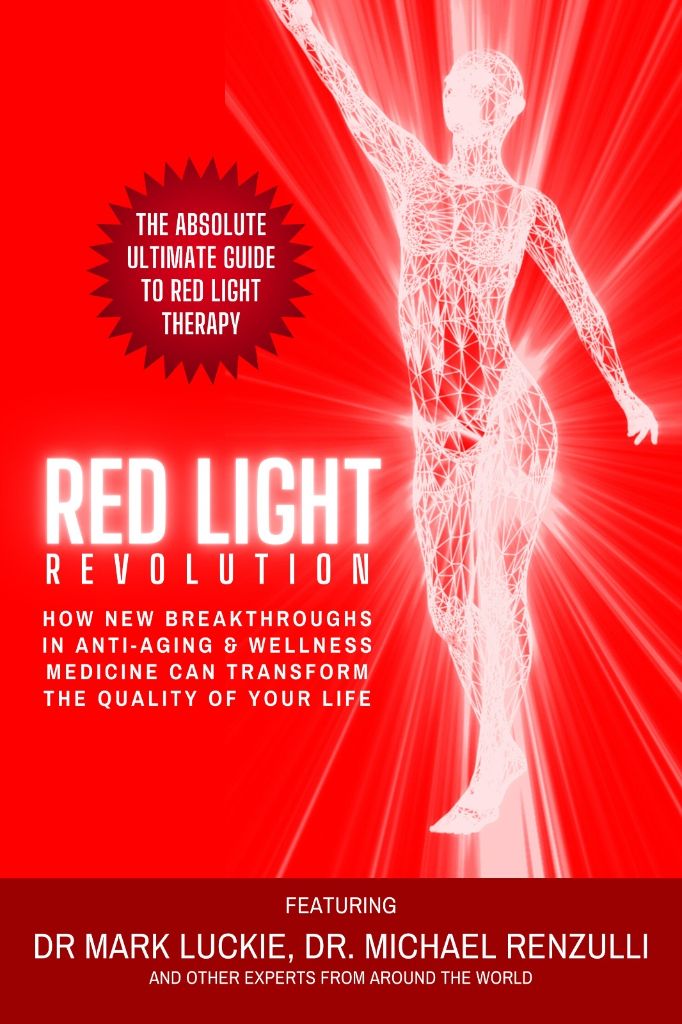
Want the Complete Guide?
Dr. Luckie co-authored Red Light Revolution — the most comprehensive consumer guide to photobiomodulation available. Get the full protocol, science, and device recommendations.