Nine years ago, I was a doctor who was supposed to know how to be healthy — and I was failing at it. I was exhausted by 2pm. My workouts were going nowhere. My focus was shot. My drive in every area of life had quietly disappeared. I was 45 years old and I felt like 70.
The irony was almost comical. Here I was, a Doctor of Chiropractic with over 13 years of practice, helping other people feel better — while silently running on empty myself. I assumed it was stress. Age. Life. I told myself: "This is just what getting older feels like."
I was wrong. And that wrong assumption was costing me everything.
The Real Reason You Feel the Way You Do
What I eventually discovered — through comprehensive hormone testing — was that my testosterone levels had dropped to the bottom of the "normal" range. Not zero. Not dangerously low. Just quietly, slowly, silently depleted over years.
This is the thing that nobody tells men: you don't have to be dramatically deficient for low testosterone to destroy your quality of life. The "normal" range for testosterone in a 25-year-old and a 65-year-old are worlds apart — yet conventional medicine treats them the same.
"You don't need to be dangerously deficient to be suffering. Suboptimal testosterone silently robs men of their vitality, drive, confidence, and joy — for years, sometimes decades."— Dr. Mark Luckie, DC
The Symptoms Nobody Connects to Testosterone
Most men think low testosterone means one thing: a decreased sex drive. And while that's certainly a symptom, it's just the tip of the iceberg. Here's what I see in my practice every single day:
- Persistent fatigue — Not just tired at night. Bone-deep exhaustion that coffee can't touch.
- Brain fog and poor focus — Difficulty concentrating, forgetting words, losing your sharp edge.
- Loss of muscle mass — Working out but not seeing results? Muscles shrinking despite effort?
- Increased belly fat — Especially the stubborn kind around the midsection that won't move.
- Mood changes and irritability — Short fuse, low patience, feeling flat or mildly depressed.
- Declining confidence — The inner certainty and boldness that used to come naturally has faded.
- Reduced drive — Not just sexual. Professional ambition, creativity, the hunger to WIN.
- Poor sleep quality — Waking up unrefreshed, light sleep, frequent waking.
Sound familiar? These symptoms are so common — and so slowly progressive — that millions of men accept them as just "aging." They are not. They are the predictable, measurable result of declining hormones.
What the Science Actually Says
Testosterone peaks in men around age 18-19, then begins a gradual decline of approximately 1-2% per year after age 30. By 40, many men have lost 10-20% of their peak testosterone. By 50, that number can be 25-35%. And that's before factoring in the modern environmental stressors — endocrine disrupting chemicals in plastics and food, chronic stress, poor sleep, sedentary lifestyles — that are accelerating this decline in younger and younger men.
A landmark study in the Journal of Clinical Endocrinology & Metabolism found that testosterone levels in American men have declined by approximately 17% over the past two decades — independent of age. This isn't just about getting older. This is a crisis of modern male health.
What Happened When I Started TRT
Within eight weeks of starting a physician-prescribed, lab-monitored Testosterone Replacement Therapy protocol, my life began to change. Not overnight. Not magically. But steadily, measurably, profoundly.
My energy returned. I started waking up before my alarm, ready to go. My workouts became productive again — I was building muscle for the first time in years. The brain fog lifted. My focus became razor sharp. The drive — that sense of purpose and hunger that I thought had just "matured away" — came roaring back.
My wife noticed before I did. She said it was like I was myself again. That hit me hard.
Is TRT Right for You?
That's not a question I can answer in a blog post — and anyone who tells you they can is doing you a disservice. The right answer comes from comprehensive, thorough hormone testing combined with a detailed clinical evaluation of your symptoms, history, and goals.
What I can tell you is this: if you're over 35 and you recognize yourself in any of the symptoms I described above, you owe it to yourself to get tested. A simple blood panel can tell you in days whether declining testosterone is behind the way you've been feeling.
- Total Testosterone (morning draw)
- Free Testosterone (the bioavailable form that actually matters)
- SHBG, Estradiol, LH, FSH — the full hormonal picture
The Bottom Line
You were not designed to feel tired, foggy, flat, and invisible. The version of you at your absolute best — sharp, strong, confident, driven, fully present — is not reserved for your 20s. With the right guidance and the right protocols, it is entirely within reach right now.
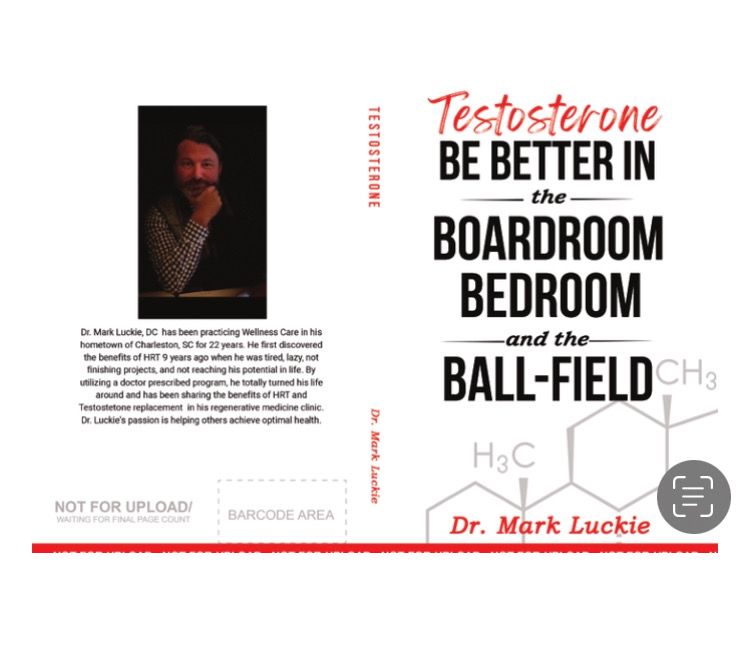
I wrote the book Testosterone: Be Better in the Boardroom, Bedroom and the Ball-Field because I wanted every man to have the information I wish I'd had at 35. The information that could have saved me a decade of living at half capacity.
Aging is for those who don't know the secrets. Now you do.

Ready to find out where your testosterone stands?
Book a free discovery call with Dr. Luckie and get a comprehensive hormone panel recommendation tailored to your situation.