
We live in a culture that glorifies the grind and mocks sleep. "I'll sleep when I'm dead," goes the saying. Here's the dark irony: if you're chronically sleep-deprived, you'll get there a lot sooner. Sleep isn't a passive state of unconsciousness — it is the single most powerful regenerative and anti-aging protocol available to humans. And it's completely free.
In my book Rest to Repair, I lay out the complete science of how sleep heals your body, balances your hormones, clears your brain, and literally determines the rate at which you age. What I'm sharing here is just the beginning of that conversation.
What Actually Happens When You Sleep
Most people think sleep is just your brain "turning off." In reality, sleep is one of the most metabolically and neurologically active states your body can be in. Here's what's happening while you rest:
- Growth Hormone Release: The majority of your daily growth hormone — the master repair and anti-aging hormone — is secreted in the first few hours of deep sleep (slow-wave sleep). Skip deep sleep, skip your nightly repair cycle.
- Glymphatic Clearance: Your brain has a waste-removal system — the glymphatic system — that only operates during deep sleep. It flushes out metabolic waste products, including the beta-amyloid plaques associated with Alzheimer's disease. Poor sleep = toxic brain buildup.
- Testosterone Production: In men, testosterone production is directly tied to sleep. Studies show that just one week of sleeping 5 hours per night reduces testosterone levels by 10-15%. That's equivalent to aging 10-15 years.
- Cortisol Regulation: Sleep is when your cortisol (stress hormone) recalibrates. Chronic sleep deprivation keeps cortisol elevated — driving inflammation, weight gain, and immune suppression.
- Cellular Repair: DNA damage accumulated throughout the day is repaired primarily during sleep. Shortened sleep = accumulated DNA damage = accelerated aging at the cellular level.
- Memory Consolidation: Memories, learning, and skills are consolidated and transferred from short to long-term storage during REM sleep. Poor sleep directly impairs cognition and learning.
"If you could bottle what happens in 8 hours of quality sleep and sell it as a drug, it would be the best-selling pharmaceutical in history. Nothing — no supplement, no protocol, no treatment — comes close to what deep sleep does for your body every single night."— Dr. Mark Luckie, DC
The Real Cost of Sleep Deprivation
The research on sleep deprivation is alarming, and it applies to the "I only need 6 hours" crowd just as much as the true insomniacs:
And perhaps most sobering: a 2023 study in Nature Communications found that consistently sleeping less than 6 hours per night in your 50s is associated with a 30% increased risk of dementia later in life. Sleep is not a luxury. It is a biological necessity with serious long-term consequences when ignored.
Dr. Luckie's 7-Point Sleep Optimization Protocol
The good news: sleep quality is something you can dramatically improve with the right strategies. Here are the core principles from Rest to Repair:
- 1. Protect your circadian rhythm: Wake at the same time every day — even weekends. Your circadian clock governs every hormone in your body. Inconsistency creates systemic chaos.
- 2. Get morning light exposure: 10-20 minutes of natural light within 30 minutes of waking sets your cortisol peak and builds adenosine pressure for deeper sleep that night.
- 3. Drop your temperature: Your core body temperature needs to fall 1-2°F to initiate sleep. Cool your room to 65-68°F. A cool shower before bed accelerates this process.
- 4. Eliminate blue light after sunset: Blue light from screens suppresses melatonin production by up to 50%. Use blue light blocking glasses or Night Shift mode after 8pm.
- 5. Address inflammation: Chronic inflammation is one of the most common — and most overlooked — causes of poor sleep. Inflammaging disrupts sleep architecture at a fundamental level. This is why the protocols in my books are connected.
- 6. Optimize magnesium: Magnesium glycinate taken before bed supports GABA (your calming neurotransmitter), reduces cortisol, and measurably improves sleep quality in deficient individuals — which is most adults.
- 7. Assess your hormones: If you're doing everything right and still sleeping poorly, the root cause is often hormonal — low testosterone, high estrogen, thyroid dysfunction, or adrenal dysregulation. Testing is the only way to know.
- 10 hours before bed: No more caffeine
- 3 hours before bed: No more large meals or alcohol
- 2 hours before bed: No more work or intense exercise
- 1 hour before bed: No more screens
- 0: The number of times you'll hit snooze
The Connection to Everything Else
Here's what I want you to understand: sleep is not separate from your testosterone, your inflammation, your weight, your cognitive performance, or your longevity. It is the foundation of all of it. You can have the best HRT protocol in the world, take every supplement correctly, and eat perfectly — and if you're sleeping poorly, you're leaving 50% of your results on the table.
Conversely, when you fix your sleep, everything else improves. Your hormones rebalance. Your inflammation drops. Your weight becomes easier to manage. Your mood lifts. Your focus sharpens. Your body composition improves. Sleep is not one piece of the puzzle. It is the frame that holds all the other pieces together.
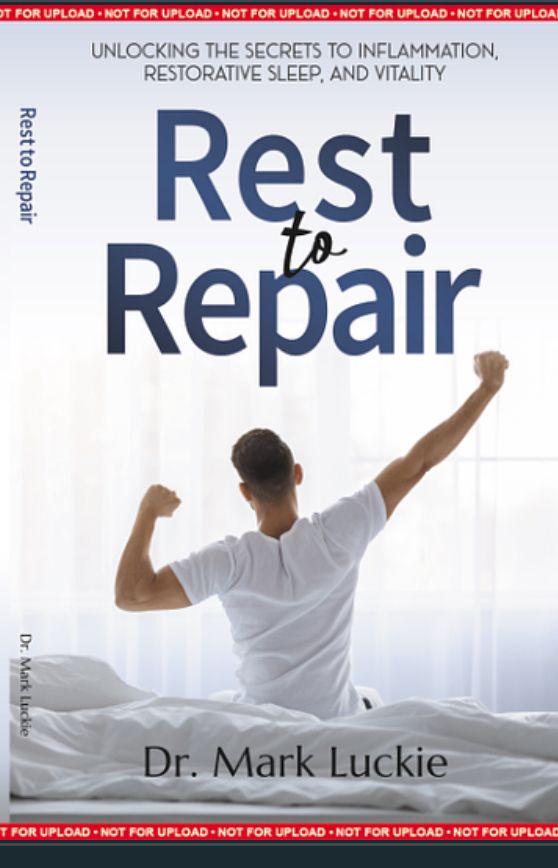
Get the Complete Sleep Optimization Guide
Rest to Repair contains the full protocol — every strategy, every supplement, every assessment tool — to help you achieve the deep, restorative sleep that genuinely reverses aging.